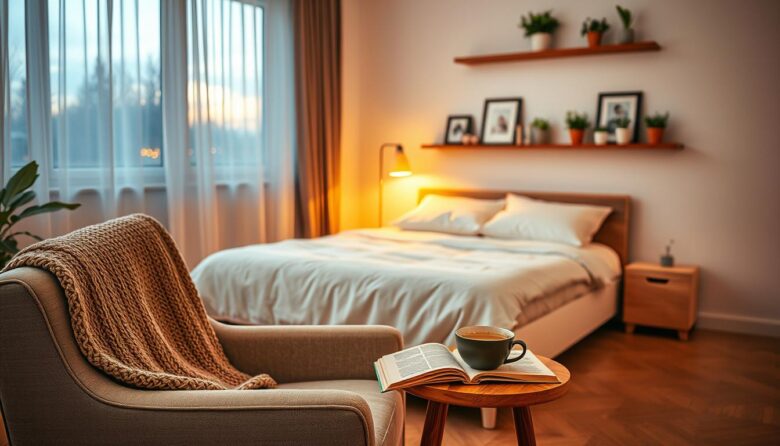
Not getting enough rest is common. About one in three American adults say they lack enough sleep each day, and older adults still need about 7–9 hours each night.
This short guide shows simple, small steps to build a calm evening routine you can start today. We focus on steady sleep times, avoiding late caffeine or alcohol, limiting naps, and quiet pre-bed activities that help the brain and body shift toward rest.
Expect clear, science-backed tips on light, temperature, and sound so your bedroom becomes a true sleep sanctuary. You’ll learn quick swaps for late screens, heavy meals, or evening stimulants that often cause wake-ups at night.
This friendly how-to gives realistic options that fit busy lives. In as little as 30 minutes of focused time each night, you can build a bedtime plan that supports long-term health and better mornings in bed and beyond.
Why Your Evenings Matter for Better Sleep Right Now
The last few hours before bed have outsized power over sleep quality. Dim light in the evening signals the brain to release melatonin, which lines up the circadian rhythm and helps you fall asleep faster.
Keep lighting low for about 60–120 minutes before bed. A steady schedule—going to bed and waking at the same time each day—stabilizes your clock and reduces night wake-ups.
A short, calm buffer after a busy day gives your system a chance to slow down. Set a gentle cutoff for stimulating tasks and swap them for low-effort activities that cue rest.
Avoid screens at least 60 minutes before lights out to limit blue-light interference with melatonin. Treat this evening block as protective health time; small changes in these minutes often lead to fewer wake-ups and better next-day energy.
Sleep and Aging: Myths, Needs, and What Changes for Older Adults
Aging changes how people feel at night, but it doesn’t cut the need for full, restorative sleep. Older adults still require about 7–9 hours of night sleep, despite the common myth that less is enough.
Insomnia is the most common disorder in adults 60 and up and means trouble falling or staying asleep most days. Sleep apnea causes pauses in breathing, loud snoring, or gasping and raises risks like high blood pressure and stroke. If a partner reports snoring or pauses, ask a clinician about testing and treatments such as CPAP and lifestyle changes.
Leg discomfort or twitching at night can point to restless legs syndrome (RLS) or periodic limb movement disorder (PLMD). Alzheimer’s and other memory disorders may shift the sleep-wake cycle; non-drug strategies—consistent light, activity, and a calm evening routine—are first-line supports.
Poor sleep links to falls, mood changes, and cardiometabolic problems. Track bed and wake times, naps, caffeine, and symptoms for a week to share with your clinician. Small, targeted steps often protect long-term health and daily function.
Light, Blue Light, and Temperature: The Science Behind a Calming Bedtime
Light and temperature send clear signals to your brain about when to sleep and when to wake. Dim evenings and cooler air help set the stage for better sleep by aligning circadian timing and bodily cues.
How darkness boosts melatonin and sleep quality
Darkness prompts the brain to release melatonin, which supports deeper sleep and steadier overnight rhythms. Keep lamps low for 60–120 minutes before bedtime to let this natural signal build.
Blue light effects from screens on the brain’s clock
Blue light from phones, tablets, and TVs tells the brain it is still daytime. That suppresses melatonin and can delay sleep timing.
Practical fixes: set a device cutoff an hour or two before bed, use warm-tone filters if you must check something, and choose amber reading lights.
Bedroom temperature sweet spot to help you fall asleep
Your body falls asleep faster when core temperature drops slightly. A bedroom around 60–70°F supports this process.
Try a warm shower an hour before bed to speed cooling, and use blackout curtains or an eye mask to block stray light.
Pair these environmental cues with a short, repeatable routine so dim light and cooler air become signals your system learns to use for easier sleep.
Healthy wind-down routines seniors can start this week
A few steady actions in the last hour can make falling asleep easier. Keep steps short and repeatable so your body learns the cue to rest. Simple, consistent habits beat complex plans.
Set a steady schedule
Pick a target lights-out and wake-up and hold that schedule daily. Regular time for going bed trains your internal clock and improves sleep over weeks.
Create a gentle buffer
Build a 30–90 minute buffer with calm activities like reading, puzzles, or light chores. Dimming lights and avoiding screens for at least 60 minutes reduces blue-light disruption.
Transition cues and putting the day to bed
Add consistent cues: dim lamps, soft music, a favorite chair, or gentle stretches. Spend five minutes jotting tomorrow’s top tasks to ease the mind.
Keep it repeatable
Choose few steps you can do nightly. When time is tight, do a short version: wash up, plan the next day, read for 10 minutes, then lights out. Expect better results after several days—consistency matters more than perfection.
Evening Eating and Drinking: Small Changes, Big Effects on Sleep
What you eat and drink in the evening can change how you sleep that night. Small timing shifts interrupt fewer wake-ups and help you wake feeling clearer the next morning.
Caffeine timing: when to have your last cup
Set a personal cutoff at least 3–7 hours before your target bedtime. Reducing caffeine within that window leads to fewer sleep problems and less morning grogginess.
Watch for hidden caffeine in chocolate, tea, some sodas, and energy drinks. These items can keep the body wired longer than expected, so swap them for non-caffeinated options later in the day.
Alcohol, heavy meals, and sugar: managing night-time wake-ups
Alcohol can help you doze off in the first hour but often fragments sleep later as it is metabolized. If you drink, try earlier, smaller servings or alcohol-free nights.
Shift large dinners earlier so digestion is underway before you get into bed. Choose lighter, lower-fat evening meals and avoid very spicy foods to reduce reflux and nighttime discomfort.
High sugar intake links to more brief arousals. Cut back on late sweets and sip fluids earlier to limit bathroom trips overnight. Track foods and timings that unsettle your sleep so you can make small, lasting changes.
Screen Smarts: Reduce Blue Light and Unplug with Ease
Evening screens can quietly push sleep later, often without you noticing. Blue light from phones, tablets, and TVs reduces melatonin and can delay your sleep cycle.
Device curfew: when to turn off TVs, tablets, and phones
Set a nightly device curfew about 60–120 minutes before your planned bedtime. That gap gives melatonin a chance to rise so falling asleep feels more natural.
Blue light filters and warmer displays if you must use devices
If you must use screens in the evening, switch displays to warm mode, add blue-light filters, and lower brightness as early as possible. These steps reduce glare and cut how much sleep-disrupting light reaches your eyes.
Calming screen-free swaps: books, puzzles, and gentle tasks
Replace scrolling with paper books, crosswords, or a short tidy-up. Keep chargers out of the bedroom and a paperback or crossword near your usual reach to make the swap simple.
Audio can help: try soft music, a podcast, or a radio program so your eyes rest while your mind settles. Track how the device curfew affects your sleep over a week; most people notice smoother evenings and fewer wake-ups at night.
Movement and Mind-Body Relaxation to Ease into Night
Gentle activity plus short relaxation practices often smooth the transition to night. These steps help the body and mind learn signals that it’s time for rest.
Best timing for exercise to support sleep quality
A longer workout of more than an hour shows the best benefit when done about 4–8 hours before bedtime. That timing builds sleep pressure without spiking alertness near lights-out.
If you exercise later, finish with a calm cool-down and give yourself at least 60 minutes to settle before bed.
Mindfulness, breathing, and light stretching to settle anxiety
Add 5–10 minutes of slow breathing, guided meditation, or light chair yoga to ease lingering anxiety. These short practices lower heart rate and quiet the mind so you can fall asleep more easily.
Gentle stretches relax tense muscles and cue the body that it is nearly time to rest.
Warm bath or shower: a simple way to cue sleep
A warm bath or shower 60–90 minutes before bed raises skin temperature briefly, then helps cooling. That drop in core temp signals the brain and can make it easier to fall asleep.
Keep cues predictable—same playlist, breathing pattern, and order—so the routine becomes a reliable prompt for better sleep.
Build a Sleep Sanctuary: Bedroom Setup That Supports Rest
A well-arranged bedroom quietly nudges your body to rest the moment you step inside. Simple changes to layout, light, and sound help the room become an obvious cue for sleep.
Darkness solutions
Darkness supports melatonin. Install room-darkening curtains or use a soft eye mask to block streetlight or early sun. Block stray light so your brain gets the clear signal to fall asleep.
Quiet the night
Soften noise with white noise machines or a fan. Earplugs help if traffic or household sounds wake you. A small sound source can mask sudden noises and protect sleep.
Bedding, pajamas, and pillows
Choose breathable, natural-fiber sheets and pajamas to regulate temperature. Pick a pillow that supports neck and head to reduce soreness when you rise from bed.
Clear the clutter
Keep a tidy path to the bed and a soft nightlight or flashlight within reach for safe movement. Store phones outside the bedroom to keep this space for rest. Small home tweaks, like a mattress topper or a quieter fan, can improve sleep quality over time.
Personalizing Your Bedtime Routine: Templates for Real Life
Personalizing the last hour lets you build a bedtime that actually works. Below are short, practical templates you can try and adapt. Unplug devices at least 60 minutes before bed and use low lighting to help melatonin rise.
30-minute quick template for busy evenings
Dim lights, put devices away, and tidy one small area. List tomorrow’s top three tasks, wash up, then read until you feel sleepy and ready for going bed.
60–90 minute deeper plan for sensitive sleepers
Start with a light snack and unplug early. Take a warm bath, change into pajamas, journal or note gratitude, then do gentle reading so you can fall asleep within your target hours bed.
When to talk to your doctor
If you snore loudly, gasp, or stay sleepless for weeks, seek medical advice. Older adults often benefit from evaluation for sleep apnea or chronic insomnia; treatments range from CPAP to behavioral therapy.
Keep anchors steady—same start time, order of steps, and a calm last cue—so the routine becomes automatic. Track results for 10–14 days and adjust one element at a time.
Sleep Better, Feel Better: Turning Nightly Habits into a Healthier Life
Small evening choices add up, shaping how you sleep and feel each day. Pick two or three easy tips—dim lights, a cooler bedroom, a device curfew—and try them for 10–14 days to judge their effect on sleep quality.
Keep a short log at home to note time to bed, wake times, wake-ups, and how you feel the next day. Simple tracking helps refine what works for your body and mind.
Many people use short breathing practices, quiet music, or light reading as a gentle bridge to rest. If snoring, gasping, or long nights of poor sleep persist, get medical advice to protect long-term health and daily life.