
Adjusting Everyday Tasks Without Giving Up Control
This section introduces the core challenge for America’s growing senior population: preserving independence while managing changes that impact routine activities. The demographic landscape is shifting significantly.
By 2030, over 72 million Americans will be 65 or older. This change stems from longer lifespans due to better healthcare.
Many older adults wish to remain in their own homes. Approximately 25 million currently achieve this with support. They use a combination of personal care and helpful tools to manage their living environment effectively. This approach supports a high quality of life.
Proactive planning is essential. It helps seniors retain control over their lives instead of facing reactive care scenarios. While changes are a natural part of getting older, numerous strategies exist.
These methods empower individuals to continue living independently and with dignity. This guide offers practical knowledge for seniors, families, and caregivers. It focuses on maintaining autonomy through thoughtful adjustments to routines and the home setting.
Key Takeaways
- America’s senior population is growing rapidly, with over 72 million people expected to be 65 or older by 2030.
- Many older adults prefer to age in place, relying on support systems to remain in their own homes.
- Proactive planning is crucial for maintaining control and independence later in life.
- A combination of caregiver assistance and assistive devices helps manage everyday activities.
- Thoughtful adjustments to the home environment can significantly improve safety and autonomy.
- This article serves as a resource for seniors and their families seeking practical strategies for independent living.
Understanding Physical Aging and Daily Task Challenges
A clear understanding of how our bodies change over time is the first step toward maintaining an active and self-reliant lifestyle in later years. The natural process of aging affects everyone differently, but it often brings a gradual shift in physical capabilities.
These changes can make routine activities more challenging. Recognizing them early is key to proactive care.
Recognizing Common Physical Limitations
Many older adults experience a decline in muscle strength and joint flexibility. This can affect mobility and overall stability.
Reduced balance is another frequent concern. It increases the risk of falls during simple tasks like walking or standing up.
Specific health conditions often accelerate these challenges. Arthritis, for instance, causes joint pain and stiffness. It can turn gripping a utensil or climbing stairs into a daunting effort.
Vision problems like cataracts or glaucoma also create significant barriers. They impact reading, cooking, and safe navigation around the home.
Cognitive conditions such as dementia present a different set of limitations. They affect memory and the ability to manage familiar routines.
Impact on Independence and Daily Routines
These physical limitations directly influence a person’s independence. Research highlights that women may face greater difficulties with mobility than men as they age.
Mikaela Bloomberg, a PhD candidate at UCL, notes that such limitations can signal more severe health issues ahead. For seniors, this underscores the need for early awareness.
When arthritis or other disease processes interfere with movement, everyday tasks require more effort. This can lead to frustration and a loss of confidence for many adults.
Understanding these effects helps seniors and their families seek supportive solutions. It empowers older adults to address changes proactively, preserving their quality of life.
Assessing Your Physical Limitations and Health Needs
A thorough personal assessment provides the foundation for making informed decisions about your independence and well-being. This process helps older adults understand their current capabilities and identify areas needing support.
Identifying Mobility and Balance Issues
Start by evaluating your movement patterns. Notice if you experience unsteadiness when walking or difficulty rising from chairs. These balance issues often signal increased fall risk.
Assess your mobility by tracking how far you can walk comfortably. Note any challenges with stairs or transitioning between positions. Early recognition of these limitations allows for proactive solutions.
Evaluating Chronic Conditions and Their Effects
Document any existing health conditions like diabetes, hypertension, or cardiovascular disease. Understand how these affect your daily activities and safety requirements.
Consider how aging impacts bone density and joint function. Many seniors experience reduced flexibility and cardiovascular capacity. Professional assessments from doctors or therapists create accurate baselines for your physical limitations.
Honest self-evaluation combined with medical guidance ensures safe, personalized strategies for older adults seeking to maintain their quality of life.
Adapting Daily Tasks to Physical Aging Limitations
Simple changes and the right equipment can empower seniors to manage their routines with confidence and security. This approach focuses on maintaining control over one’s life.
Thoughtful adjustments preserve dignity and promote a high quality of living.
Utilizing Adaptive Aids and Tools
Many helpful devices extend your reach and reduce strain. A reacher grabber can pick up items from the floor without bending.
Dressing aids like button hooks and sock helpers make getting ready easier. In the bathroom, a shower chair and grab bars provide stable support.
Kitchen tools are also available. Jar openers and lightweight pots simplify meal preparation. These aids offer practical assistance for common tasks.
Implementing Home Modifications for Safety
Your living space can be updated to prevent accidents. Start by improving lighting in hallways and stairs.
Remove loose rugs and clutter that are tripping hazards. Installing grab bars in the bathroom is a key step for safety.
Consider these changes for a safer home:
- Add non-slip mats in the shower and tub.
- Install ramps for easier entry and exit.
- Use lever-style door handles instead of knobs.
These modifications help seniors navigate their home with greater independence and reduce the need for constant assistance.
Practical Exercise and Mobility Strategies for Seniors
Regular physical activity offers powerful benefits for seniors seeking to preserve their strength and movement capabilities. These exercises help maintain functional mobility and support overall health.
Adaptive Fitness Routines and Low-Impact Activities
Low-impact activities provide safe options for older adults. Water aerobics reduces joint stress through buoyancy. This makes it ideal for individuals with arthritis.
Walking programs can be adapted using supportive tools like canes. These exercises improve cardiovascular health and maintain muscle tone. They support a better quality of living.
Incorporating Chair Exercises and Resistance Bands
Chair-based exercises offer stability for those with balance concerns. Seated leg lifts and arm raises build strength safely. Resistance bands provide gentle tension that can be adjusted.
These methods help combat muscle loss while accommodating individual capabilities. They promote continued independence through safe physical activities. Always consult professionals for personalized care plans.
Managing Medication and Personal Care Routines
Maintaining consistent routines for medication and personal care is fundamental to preserving health and autonomy for older adults. These areas are crucial for preventing complications and supporting a high quality of life.
Effective Medication Management Techniques
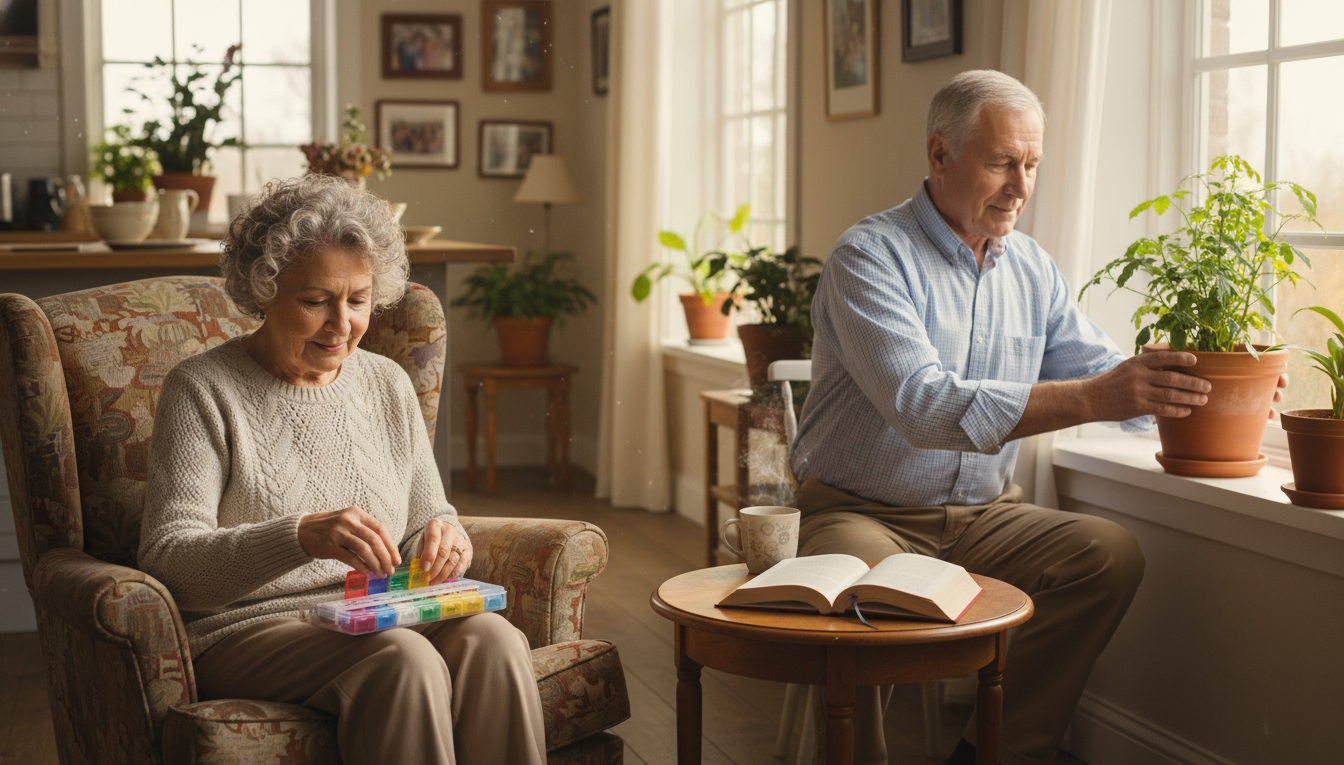
Successful medication management starts with organization. Using a weekly pill organizer with clear compartments prevents missed doses. This simple tool is a powerful aid for seniors.
Technology offers excellent support. Automatic pill dispensers with alarms and smartphone apps provide timely reminders. These solutions are especially helpful for individuals managing multiple medications.
Involving family or a caregiver adds a vital safety layer. They can help with sorting medication and attending doctor appointments. Regular reviews with a pharmacist ensure regimens stay current.
Personal hygiene is equally important for health. Adaptive tools like shower chairs and long-handled sponges promote safety. They enable seniors to manage bathing with confidence.
Establishing a set routine for both medication and hygiene reduces stress. It creates a predictable structure for the day. This approach supports long-term independence and well-being.
Leveraging Home Care Services for Enhanced Support
Professional home care services offer a valuable bridge between complete independence and institutional living for older adults. These services provide essential support that enables seniors to maintain their autonomy while receiving necessary help.
The right care plan respects individual preferences while ensuring safety and well-being. Families can choose from various options tailored to specific needs.
Customizing In-Home Care Plans
Personalized care begins with a thorough needs assessment. Reputable agencies work with families to create flexible schedules.
Services range from occasional visits to full-time live-in support. This customization allows seniors to receive exactly the level of assistance they need.
Maximizing Assistance with Daily Tasks
Home health aides provide help with personal care and household activities. They assist with bathing, dressing, and meal preparation while maintaining dignity.
This professional support reduces family caregiver burden. It prevents burnout and allows loved ones to maintain healthy relationships.
Regular communication ensures services evolve with changing needs. This approach promotes continued independence and quality living at home.
Incorporating Assistive Technologies and Safety Modifications
Modern technology creates powerful safety nets for seniors seeking secure independent living. These solutions work alongside physical home modifications to address safety concerns comprehensively.
Emergency medical alert systems provide immediate access to help. Wearable pendants and automatic fall detection devices connect users to professionals with one button press. This reliable support is vital for those living alone.
Smart Home Devices for Secure Living
Voice-activated assistants and automated lighting systems increase convenience and security. Smart thermostats maintain comfortable temperatures without manual adjustment. Video doorbells allow safe visitor screening from any room.
These smart home technologies reduce physical strain while enhancing protection. They represent important tools for maintaining independence.
Emergency Alert Systems and Grab Bars Integration
Strategic grab bar placement creates stable support points throughout the home. Install them near toilets, showers, and beds where balance assistance is most needed. Proper installation is crucial for effectiveness.
Combining grab bars with emergency systems creates layered safety. This approach addresses both prevention and response needs comprehensively.
Fall prevention requires a multidimensional strategy. Remove tripping hazards like loose rugs and improve lighting in key areas. Ensure mobility aids are readily accessible when needed.
Medication management technologies include smart pill dispensers with alerts. These devices help maintain proper adherence to prescribed regimens. They work alongside other safety modifications for complete protection.
Prioritizing these changes based on individual risk assessments creates personalized safety plans. This thoughtful approach provides peace of mind for seniors and their families.
Planning Financial and Long-Term Care Strategies
Financial foresight is essential for maintaining independence and quality of life in later years. Without proper preparation, the high costs of care services can quickly deplete retirement savings.
For example, in-home care averages over $100,000 annually in many areas. Comprehensive care spanning several years can exceed $400,000 per person.
Long-Term Care Insurance and Financial Security
Long-Term Care Insurance provides a financial buffer against these substantial costs. This coverage helps protect assets intended for loved ones.
Obtaining insurance while healthy ensures more affordable premiums. Early planning allows seniors to choose their preferred level of care.
Alternative strategies include Health Savings Accounts and veteran benefits. Consulting financial planners specializing in elder care provides personalized guidance.
Proper financial management reduces stress on family members. It preserves both quality care options and legacy assets.
Utilizing Community Resources for Social and Emotional Well-Being
Community-based programs and resources provide invaluable support networks that combat isolation and enrich the lives of seniors. These services are vital for maintaining emotional health and a high quality of life.
Engaging in Social Programs and Companionship Services
Regular social interaction is a powerful tool against loneliness. Many community centers offer group activities like book clubs and exercise classes.
These programs provide mental stimulation and build friendships. Friendly visitor services offer regular check-ins and conversation.
This companionship is crucial for older adults who live alone. It helps them feel connected and reduces feelings of depression.
Support Networks for Caregivers and Seniors
Caregivers also need robust support systems to prevent burnout. Local support groups offer a space to share experiences and gain advice.
Respite care services give family members a necessary break. This ensures they can provide sustained, high-quality care.
Finding these resources is straightforward. Contact your local Area Agency on Aging or senior center. They can connect you with the right programs for enhanced living and independence.
Embracing a Future of Empowered, Independent Living
Taking charge of your later years begins with a vision of empowered independence. This journey combines thoughtful preparation with practical solutions that help seniors stay in control.
Proactive planning allows you to address needs before they become urgent. Using tools like walkers and canes, along with safety modifications, creates a secure home environment.
This approach preserves family relationships. Your loved ones can offer companionship rather than constant care. They provide emotional support while you maintain autonomy.
Despite health conditions or mobility issues, you can continue enjoying a high quality of life. The right strategies help maintain the activities you value most.
View adaptation as intelligent strategy, not surrender. With proper planning and resources, seniors can experience fulfilling living on their own terms for years to come.