
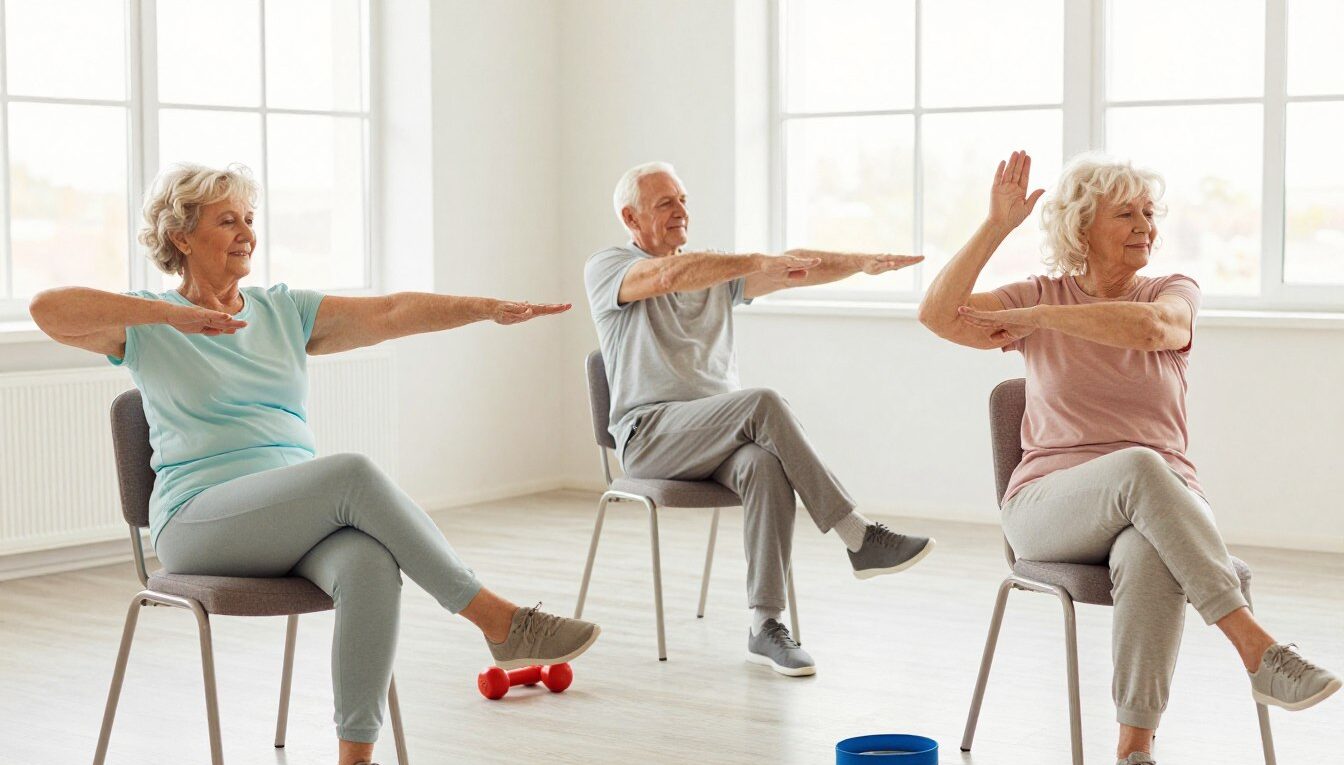
Easy Exercises Seniors Can Do Every Day Even With Limited Mobility
Staying active is a key part of healthy aging. Many older adults believe physical limitations make movement too difficult. This is a common concern, but it doesn’t have to be true.
Research confirms that a consistent seated routine offers real benefits. Simple movements done from a chair can improve muscle tone and balance. This helps with everyday tasks like walking short distances or carrying groceries.
These activities are safe and effective for people around age 65 and older. They are also ideal for those who use walkers or wheelchairs. You don’t need any special equipment or a gym membership to start.
The goal is to build functional strength and stamina. This focus supports independence and a better quality of life. A little movement each day can make a significant difference.
Introduction to Safe and Effective Movements for Seniors
Daily movement plays a vital role in promoting health during the later years. As we advance in age, our bodies naturally change. Staying mobile helps counteract these shifts and supports independence.
Understanding the Importance of Daily Activity
Regular physical activity fights common age-related issues. It helps prevent muscle loss and keeps bones dense. This is crucial for maintaining strength and preventing falls.
Even one session of moderate movement offers quick wins. You might notice better sleep and lower blood pressure almost right away. These immediate health benefits make starting worthwhile.
Overview of Gentle Exercises and Their Benefits
Gentle exercises are designed for safety and effectiveness. They are not about intensity but consistent, mindful movement. This approach works well for older adults with limited mobility.
Over the long term, this routine reduces serious health risks. It can lower the chance of dementia, heart disease, and type 2 diabetes. Building better balance and stronger muscles protects you every day.
The goal is realistic, functional improvement. Focus on what your body can do today and build from there. This path leads to a better quality of life.
Benefits of Chair and Seated Exercises
The advantages of seated routines extend far beyond simple convenience. They provide a secure foundation for physical activity. This approach is an effective modification, not a compromise.
People of all ability levels can achieve meaningful results safely. Research confirms measurable improvements in functional ability.
Enhancing Mobility and Reducing Fall Risk
These movements directly improve stability and coordination. Better balance lowers the risk of dangerous falls. This protects independence.
Stronger muscles from seated work make daily tasks easier. You gain confidence for walking short distances or carrying items. Routine chores become more manageable.
Building Strength, Flexibility, and Endurance
Chair-based activity safely increases muscle tone. It can even elevate your heart rate for cardiovascular benefit. The focus is on functional gains.
You build the stamina needed for household activities. Improved flexibility maintains essential range of motion. Reaching and bending feel smoother.
While not for athletic training, this routine builds practical strength. It supports a better quality of life through consistent effort.
How to Get Started with Your Exercise Routine
Your journey toward better health starts with setting up a proper space for movement. A successful plan hinges on safety and comfort from day one.
Choosing the Right Chair and Environment
Select a steady chair with a back and firm seat. Avoid sofas, soft chairs, or anything on wheels. A dining room chair without armrests is often perfect.
Clear ample space around you. Ensure good lighting and have a stable surface nearby for support if needed. This creates a secure area for your workout.
To get started, begin with one set of ten repetitions. Gradually build to two or three sets as you feel able. This approach respects your current fitness level.
Adults are advised to get 150 minutes of moderate activity each week. It’s fine to build up slowly. Break your routine into manageable 10 or 15-minute chunks, done two or more times daily.
You can do these movements any time. Mornings or evenings might help consistency. Always warm up with a few minutes of light movement first.
This routine is safe to do daily for most people. Consistency is key, not duration. Listen to your body and progress at your own pace.
Detailed Exercise Breakdown for the Whole Body
Targeted movements performed from a seated position can strengthen your entire body. This routine builds balanced strength across major muscle groups.
Lower Body Routines: Seated Leg Extensions, Heel and Toe Raises
Begin with seated leg extensions. Sit with both feet on the floor. Keep your legs about hip-width apart. Shuffle your bottom toward the front of the chair.
Keep your back straight and shoulders pulled back. Slowly lift one leg until it is parallel with the floor. Hold for a moment. Lower it back down. Complete 10 repetitions on each side.
Next, perform heel raises. From the same seated position, slowly raise both heels off the ground. Keep your toes planted. Lift as high as is comfortable without pain.
Then lower your heels. Follow this with toe raises. Lift your toes while keeping your heels firmly on the floor. These moves work the front and back of your lower legs.
Upper Body and Core: Bicep Curls, Shoulder Blade Squeezes, and Pelvic Tilts
For arm strength, try bicep curls. Sit with your feet flat. Bend one arm at the elbow as far as possible. Lower it back down slowly. Do 10 reps per arm.
Then, do shoulder blade squeezes. Bend your arms at the elbows so they are parallel to the floor. Gently pull your elbows back. Squeeze your shoulder blades together.
Hold for a moment and release. Finish with a pelvic tilt for your core. Sit with your back touching the back of the chair. Place both feet on the floor.
Engage your abdominal muscles. Gently push your lower back into the chair back. Tuck your tailbone under. Hold for a few seconds. Release and repeat 10 times.
Stretching and Flexibility Routines for Seniors
Stretching routines offer profound benefits that go well beyond physical mobility. These movements can help regulate blood glucose levels and improve mental health. They also play a crucial role in fall prevention by maintaining balance and overall strength.
Upper and Lower Body Stretches
Focus on your lower extremities for mobility. Key areas are calves, hamstrings, hip flexors, and quadriceps. Stretching muscles in the upper body is also very beneficial.
Try a standing quadriceps stretch. Use a chair for support. Hold on with your left hand and bend your right knee. Grab your ankle with your right hand and gently pull your foot toward your bottom. Keep your knee pointed toward the floor.
Hold this position for 10 to 30 seconds. Then repeat with your left leg. For your shoulders, sit or stand up tall. Grab your right arm with your opposite hand.
Slowly and gently pull your arm across your chest until you feel a stretch. Keep your elbow below shoulder height. Hold for 10 to 30 seconds and switch arms.
Safe Movement Techniques and Warm-Up Tips
The best time for these exercises is after activity when your muscles are warm and loose. If you don’t have a specific workout, stretching can be done any time. Mornings or evenings might help you remember.
Always walk around for a few minutes first. This ensures your muscles are loose and warm. Never stretch cold muscles.
Maintain proper form during each stretch. This protects your joints and improves your range of motion. Consistency with these routines supports long-term health.
Incorporating Aerobic and Balance Activities
To achieve comprehensive health benefits, aerobic activity and balance training should be combined. This pairing supports heart health and everyday stability.
A complete weekly plan includes moderate aerobic movement. Adults should aim for 150 minutes each week.
Building up slowly is perfectly fine. Start with short 10 to 15-minute sessions.
Low-Impact Walking and 10-15 Minute Sessions
Simple aerobic options are very accessible. Walking is a fantastic choice.
Swimming, cycling, and water aerobics are also excellent. These activities get your heart pumping safely.
You can break your total time into manageable chunks. This makes the goal less daunting.
Balance Boosters and Fall Prevention Strategies
Accidental falls are a major concern for many older adults. Specific exercises help prevent them.
Balance work makes walking on uneven surfaces easier. This is a practical skill for daily life.
Try the shifting weight exercise. Stand with your feet hip-width apart.
Relax your hands at your sides. Shift your weight onto your right side.
Lift your left foot a few inches off the floor. Hold for 10 seconds, working up to 30.
Repeat on the other side. Do this 3 times per leg.
For single-leg balance, stand with feet hip-width apart. Use a sturdy chair for support if needed.
Lift one foot by bending your knee. Hold the position for 10 to 30 seconds.
You can practice these movements several times a day. Even standing in line is a good time.
Expert Tips for Adapting Exercises to Individual Mobility Levels
The most effective fitness plan is one tailored to your individual needs and limitations. Everyone has a unique starting point and personal goals.
Listening to your body and making smart adjustments is key for safety and progress. This personalized approach helps you build sustainable habits.
Consulting Healthcare Providers and Physical Therapists
Before starting any new activity, speak with your doctor or a physical therapist. They can assess your current fitness level and health status.
These professionals recommend a routine that matches your goals. They consider any medical conditions or mobility restrictions you live with.
If you feel joint pain during an exercise, that is a signal to stop. A little muscle soreness is normal, but sharp or persistent pain is not.
Push only until you feel your muscles working. Do not go to the point of exhaustion or discomfort.
Modifying Movements for Progressive Improvement
Exercise modifications are smart adaptations, not failures. They allow people at any ability level to participate safely.
As we age, maintaining muscle mass and strength becomes very important. Your doctor may adjust specific movements to reduce strain on your body.
Start with what feels manageable. You can gradually increase the challenge over time. This method supports continuous improvement without risk.
A consistent, adapted routine is a powerful tool for long-term health. It helps you maintain independence and a better quality of life.
Conclusion
Physical activity remains a cornerstone of well-being throughout every stage of life. Regular exercise helps you stay strong and flexible. It also supports your overall health as you age.
A consistent seated routine can make a real difference for seniors. It requires no special gear and can be done safely at home. This approach helps maintain independence for daily tasks, even with limited mobility.
Always talk to your doctor before beginning any new plan. They can ensure it’s right for your body. Start slowly and be patient with your progress over time.
Small efforts add up. People of all ability levels can improve their strength and mobility. Your commitment today builds a healthier tomorrow.

Alex Oliver is a caregiver advocate and aging support researcher with over 10 years of experience helping families navigate the emotional and practical challenges of caring for elderly loved ones. Through Senior I Love, Alex shares research-based guidance, daily care strategies, and emotional resilience tools to support caregivers worldwide.