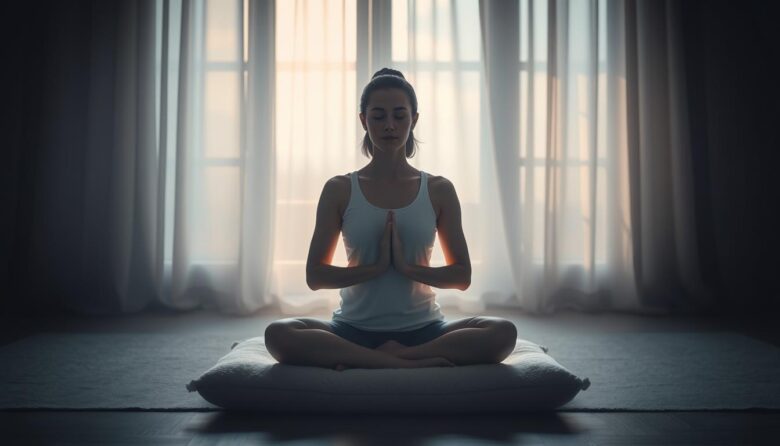
Our minds often race, thinking about the past or worrying about the future. According to functional medicine specialist Melissa Young, MD, this habit can keep stress hormones active for too long. This chronic stress raises the risk for many health problems.
Mental and emotional strain can show up physically. It can lead to headaches, digestive troubles, and a weaker immune system. Finding a simple way to manage this pressure is essential for well-being.
Intentional breathing offers a powerful, accessible solution. This guide presents quick routines that take just a few minutes of your day. They are a no-cost method to counter the effects of stress.
You will learn scientifically-backed techniques that fit into a busy schedule. These methods can help lower blood pressure and reduce physical tension. This practice is suitable for everyone, regardless of age or fitness level.
Our goal is to provide you with tools for immediate relief. You can discover which methods work best for you. This approach can be a gateway to improved energy and a better quality of life.
Understanding the Science Behind Breathwork
The key to de-escalating tension is found in the balance of two opposing forces within your nervous system. This automatic control system, known as the autonomic nervous system, has two main parts that manage your body‘s response to challenges.
Exploring the Autonomic Nervous System
One part is the sympathetic nervous system. It triggers the “fight-or-flight” response. This prepares your body for action by increasing your heart rate and blood pressure.
The other part is the parasympathetic nervous system. It promotes “rest-and-digest” functions. This branch works to slow your heart rate and encourage recovery.
How Deep Breathing Influences Stress Response
Modern life can keep the sympathetic system active too often. This creates a chronic stress state.
Slow, deep breathing is a direct way to activate the parasympathetic nervous system. It stimulates the vagus nerve, initiating the relaxation response. This shift lowers cortisol and brings your body back to balance.
Regular practice helps retrain your nervous system. It teaches your body to access this peaceful state more easily, reducing the impact of stress.
What is Breathwork and Its Role in Mindfulness?
Ancient wellness systems recognized early on that how we breathe directly impacts how we think and feel. Intentional breathing practices involve consciously changing your breath patterns to achieve specific outcomes. These techniques have roots in Eastern traditions like Ayurveda and traditional Chinese medicine.
This practice differs from our automatic breathing by requiring deliberate focus on rhythm and depth. When combined with mindfulness, it becomes a powerful meditation tool that observes sensations without judgment.
The Link Between Breath and Mental Clarity
Your breath serves as an anchor for attention, grounding you in the present moment. This focus interrupts repetitive thoughts and reduces mental chatter. The space created allows for clearer thinking.
Regular practice enhances self-awareness and emotional regulation. You learn to observe your mind‘s patterns without being overwhelmed. This supports overall mental health by managing anxiety symptoms.
Conscious breathing creates a bridge between body and mind. It’s an accessible technique that anyone can practice daily. The benefits extend beyond relaxation to improved cognitive function.
Popular Five-minute Breath Routines for Daily Calm
Let’s explore specific five-minute routines that can be easily integrated into your day. These simple breathing techniques are designed for quick relief and require no special equipment.
Diaphragmatic Breathing and Its Benefits
Diaphragmatic breathing is a foundational technique. It teaches you to breathe deeply into your belly instead of your chest.
To start, place one hand on your chest and the other on your stomach. Breathe in slowly through your nose, letting your belly push your hand out.
Your chest should stay relatively still. This exercise promotes efficient oxygen exchange.
The benefits include a lower heart rate and reduced blood pressure. It is especially helpful for improving lung function.
Box Breathing and 4-7-8 Technique
Box breathing uses a simple, equal pattern. Inhale for four counts, hold for four, exhale for four, and hold again for four.
This rhythmic technique creates a calming focus. It helps steady your mind during stressful moments.
The 4-7-8 breathing technique is another powerful tool. Inhale through your nose for four counts.
Hold your breath for seven counts. Then exhale completely through your mouth for eight counts.
The long exhale is key. It powerfully signals your body to relax. This makes it an excellent exercise before sleep.
Both are highly effective techniques you can master in just a few minutes of your time.
Step-by-Step Guide to Your First Breathwork Session
Establishing a successful breathing practice starts with creating the right environment and approach. This foundation ensures your initial experience is positive and sustainable.
Preparing a Quiet Space
Choose a comfortable area free from interruptions. You can sit upright in a chair with feet flat on the floor. Alternatively, lie on your back with arms relaxed at your sides.
Ensure your spine remains straight but not rigid. This position supports deep, unrestricted breathing. The goal is physical comfort throughout your practice.
Practice Techniques for Immediate Relaxation
Begin with diaphragmatic breathing. Place one hand on your chest and the other on your belly. Close your eyes and inhale slowly through your nose for four counts.
Feel your stomach expand while your chest stays relatively still. Don’t worry if your mind wanders during these exercises. Gently return your attention to the physical sensations of each breath.
Try using a simple word like “peace” with each exhale. Start with five to ten minutes daily for consistent results. Regular practice trains your nervous system to access relaxation more easily.
If you struggle with focus, consider guided sessions available online. Experiment with different techniques to discover what works best for your body.
Mastering breathwork, mindfulness, calm focus: Achieve Daily Serenity
True mastery of intentional breathing comes from weaving it seamlessly into the fabric of your daily life. The goal is to make these techniques an intuitive response, not just a scheduled task.
Consistent practice builds strong neural pathways. This makes accessing a peaceful state feel more natural over time.
Integrating Techniques into Your Routine
Link your breathing exercises to existing habits. Try a few minutes of diaphragmatic breathing with your morning coffee.
Use box breathing before a big meeting. Practice the 4-7-8 technique as part of your evening wind-down ritual.
This approach anchors the new practice to established parts of your day. Soon, it becomes second nature.
The benefits are compounding. Initial effort evolves into automatic skill. You gain a portable tool for managing stress anywhere.
This creates mental space for joy and improves your overall quality of life. Mastery means knowing when your body and mind need support.
Tips and Tricks to Enhance Your Breathing Practice
Elevating your breathing practice involves simple tools that can significantly deepen its effects. Using anchors like mantras or focal points helps train your mind to stay present.
This process retrains your nervous system to create new, peaceful patterns.
Using Mantras and Focal Points
A mantra is a word or phrase repeated silently. It gives your attention a specific job, quieting mental chatter.
Try a single word like “peace” on the inhale and “release” on the exhale. Even counting your breath acts as a simple mantra meditation.
This anchors you in the present moment and away from distracting thoughts.
You can also use physical sensations as a focal point. Direct your attention to the feeling of air at your nose or the rise of your belly.
Another powerful technique involves sound. Lion’s Breath uses a forceful “haaaa” sound on the exhale.
Bumblebee Breath involves a humming sound. These create a strong sensory sensation that helps with focus.
Experiment with these different methods. Find which combination of breathing patterns and anchors works best for your mind and body.
Incorporating Breathwork into a Busy Lifestyle
Finding time for self-care can feel impossible with a packed schedule. The good news is that effective breathing techniques require only a minute or two of your day.
You can weave these powerful exercises into the natural pauses of your life.
Short Breaks and On-the-Go Practices
Turn small moments into opportunities for calm. Try three rounds of box breathing while your coffee brews.
Use a simple belly breathing exercise while waiting for your computer to start. These “breath snacks” prevent stress from building up.
This consistent practice, even in tiny doses, trains your nervous system. It makes the relaxation tool more effective when you truly need it.
Adapting Techniques for Different Settings
The beauty of this practice is its adaptability. You can modify any breathing pattern for your environment.
Use a subtle breath pattern during a meeting. Shorten breath holds in public for discretion.
For physical tasks like climbing stairs, pursed-lip breathing can help. This approach manages feelings of anxiety in real-time.
Consistency with brief techniques yields better results than waiting for perfect conditions. It makes managing daily stress a practical reality.
Embracing a Calm Focus: A New Way to Live Daily
Adopting a regular breathing routine offers a sustainable path to enhanced well-being that grows over time. The benefits extend far beyond momentary relaxation, creating lasting positive changes.
Scientific research confirms that consistent practice improves both physical and emotional health. These exercises can lower blood pressure and enhance sleep quality. They also support better mental health by reducing symptoms of anxiety and stress.
This approach builds psychological resilience rather than just treating symptoms. The mind-body connection strengthens with regular practice. You become more aware of physical sensations and emotional states.
Even brief daily sessions yield significant returns over weeks and months. This accessible technique requires no special equipment or financial investment. It represents a powerful complementary approach to conventional healthcare.
The journey toward lasting peace begins with your very next breath. These simple methods provide everything needed to transform your relationship with daily challenges.