
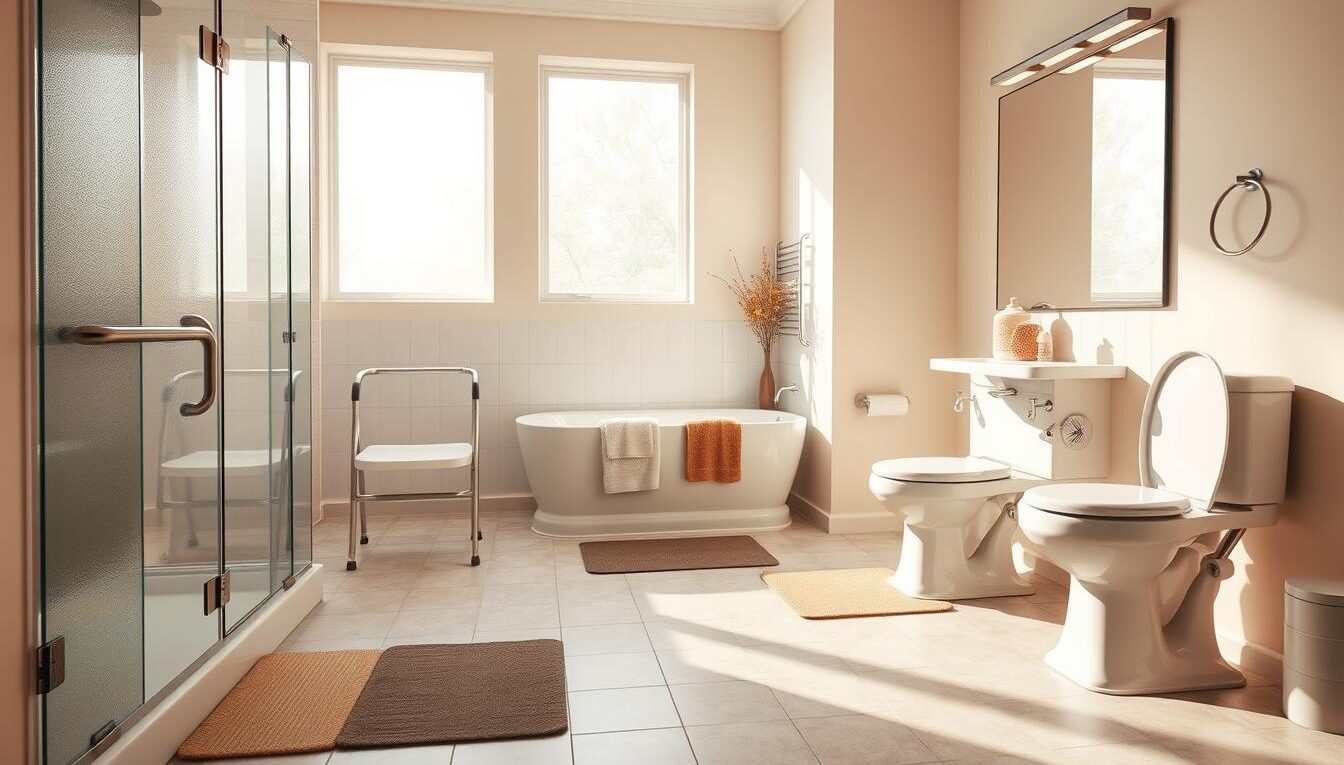
Making the Bathroom Safer for Seniors: What to Change First
For many older adults, the most dangerous room in the home isn’t the kitchen or the stairs. Startling data shows that 80% of falls after age 65 happen in this specific wet space. These accidents can lead to serious injuries and a loss of confidence.
Slippery tile and tight spaces create unique hazards. Hard surfaces offer no cushion during a slip. This reality worries families who want their aging loved one to live independently and securely.
This guide helps you navigate these concerns. We focus on the most impactful changes first. You will learn how to balance immediate security with long-term independence for seniors. Our steps are based on expert advice and national statistics.
Understanding the Risks and Hazards in Senior Bathrooms
Data from health organizations paints a concerning picture about where most injuries occur for people over 65. This space presents unique risks that demand attention.
Statistics and Fall Data
The Centers for Disease Control and Prevention identifies falls as the top cause of injury-related death among seniors. A staggering 80% of these incidents after age 65 happen in this wet environment.
The National Safety Council notes nearly 200,000 such accidents yearly in the U.S. These events represent 70% of all home mishaps. One person dies each day from related injuries.
Such data underscores the urgent need for proactive steps to protect health.
Common Causes of Bathroom Accidents
Slippery tile floors and wet surfaces from showers create immediate hazards. Inadequate lighting makes it hard to see potential dangers.
A lack of support fixtures leaves individuals without something to hold. Confined spaces and hard surfaces worsen outcomes when a slip occurs.
The physical demands of bending or stepping over a tub edge add to the challenge. Age-related changes in vision, balance, and strength increase vulnerability.
Understanding these factors helps families identify specific threats. It allows them to prioritize which changes will make the biggest difference.
bathroom safety modifications for elderly parents
The first line of defense against slips and falls involves installing sturdy support fixtures. Two primary upgrades form a critical foundation for daily security.
Installing Grab Bars and Support Fixtures
Heavy-duty grab bars provide crucial stability. You must make sure they are placed at strategic points.
Install them near shower entrances and beside the toilet. Proper height is between 33 and 36 inches from the floor.
Vertical or angled bars help with standing up. Horizontal bars assist with sitting down and balance. Always choose professional-grade bars with non-slip surfaces. Remember, towel bars are not designed to support body weight.
Benefits of Raised Toilet Seats and Toilet Aids
Raised toilet seats increase height by several inches. This simple change reduces strain on knees and hips during use.
It makes sitting down and standing up much safer. Basic models are available, as are seats with built-in armrests.
These armrests offer additional support and stability. Such aids help individuals maintain independence in their daily routine. They are among the first changes families should implement in bathrooms.
Enhancing Shower and Bathtub Safety for Seniors
Simple changes to the bathing area can dramatically improve stability and confidence for seniors. This zone requires specific upgrades to address wet, slippery surfaces.
Focus on two key areas: the floor beneath your feet and supportive seating options. These updates work together to create a secure environment.
Non-Slip Mats and Appropriate Flooring
Start by adding traction to every wet surface. Place non-slip mats inside the tub and on the shower floor.
Adhesive strips or rubber suction mats also provide excellent grip. For a more permanent solution, consider textured vinyl or slip-resistant tile.
These materials greatly reduce the chance of a dangerous slip. They are a foundational step for any bathing space.
Using Shower Chairs and Sliding Benches
Shower chairs allow individuals to bathe while seated. This eliminates the need to stand on a wet floor.
It offers significant comfort and reduces physical strain. For tubs, a sliding bench is a clever solution.
Users can sit outside the tub and slide safely inside. This avoids lifting legs over a high edge.
Both options help maintain independence and dignity during personal care. They are practical tools for reducing risk.
Improving Accessibility through Strategic Layout Changes
The journey to and from this essential room is as critical as the safety features within it. Strategic layout changes support safe navigation and promote independence for older adults with varying mobility needs.
Widening Doorways and Creating Clear Pathways
Start by checking the width of the entry. Doorways should measure at least 32 inches wide. This allows easy passage for walkers, canes, or a wheelchair.
Next, evaluate the pathways. Clear hallways and the room itself of any major obstacles. Remove bulky furniture, decorative items, and general clutter. This creates a safe and unobstructed travel path for everyone.
Adjusting Storage and Countertop Heights
Reposition daily essentials for easy access. Keep towels, toiletries, and toilet paper within arm’s reach. This prevents dangerous stretching or bending that increases fall risk.
Consider the height of counters and sinks. Lower or adjustable fixtures accommodate seated users and different mobility levels. Thoughtful storage solutions maximize usable space.
These changes help individuals navigate the area according to their personal needs. They support daily independence and dignity.
Optimizing Safety with Proper Lighting and Flooring
Many mishaps occur not from a lack of support, but from an inability to see hazards or maintain footing.
Proper lighting and secure flooring are critical upgrades. They address these fundamental risks directly.
Start by illuminating the entire path to the room. Bright, energy-efficient LED bulbs are a great choice.
Add motion-activated nightlights in hallways and the space itself. This lighting is especially helpful for those using walkers.
It turns on automatically, leaving hands free. Good visibility helps prevent trips and falls.
Next, evaluate the floor. Slippery tile is a major hazard in these wet areas.
Consider replacing it with textured vinyl or bamboo for better traction. These materials offer a more secure surface.
For a quick fix, use high-quality non-slip mats. Ensure they lie flat and are secured to avoid new tripping risks.
Assessing these two elements can lead to immediate improvements. Simple changes here make the environment much more secure for daily routines.
Installing Emergency and Assistive Features
When considering comprehensive home security for aging individuals, emergency response capabilities and water temperature regulation represent two critical yet frequently underestimated components.
Emergency Call Systems and Sensors
Personal emergency response systems provide immediate access to help. A wearable pendant or wall-mounted button connects to a monitoring service.
This solution is vital for those living independently. It ensures assistance arrives quickly after a fall or health issue.
Thermostatic Controls and Anti-Scald Devices
Hot water poses a serious burn risk, especially with delayed reaction time. Thermostatic mixing valves maintain consistent temperature.
Make sure your water heater is set no higher than 120°F. Lever-style faucets offer easier control than traditional knobs.
These features provide essential support and prevent painful injuries. They complete the safety picture for any living space.
Budget-Friendly Modifications for Immediate Improvements
Financial constraints should never be a barrier to creating a secure and comfortable environment for an aging family member. Many impactful upgrades are surprisingly affordable and can be installed quickly.
Focus on changes that eliminate common trip points and improve stability. These practical tips deliver real security benefits without a major renovation.
Low-Cost Upgrades and Quick Safety Fixes
Start by clearing the floor of any decorative rugs or throws. These items can slide or bunch up, creating a serious tripping hazard.
Instead, use secure anti-slip mats at the shower base. Inexpensive adhesive strips add crucial traction to tub and shower floors.
Install plug-in night-lights in hallways and the space itself. This simple step prevents fumbling for light switches in the dark.
Elevated toilet seats are a fantastic value. A raised toilet seat makes sitting down and standing up much easier, offering immediate comfort and support.
Swap out slippery bar soap for body wash in a pump bottle. This small change is easier to handle and less likely to be dropped.
Consider a long-handled sponge for washing. It helps a loved one maintain independence without dangerous stretching.
A sturdy shower seat provides a stable place to rest. Place a chair near the sink for grooming tasks. These affordable items make daily routines safer at home.
By prioritizing these quick fixes, you make sure your senior’s living space is significantly safer today.
Smart Home Integration for Long-Term Bathroom Safety
Integrating smart devices into daily routines can provide continuous protection for older adults. These technologies adapt to evolving physical requirements and offer scalable solutions.
Voice-Activated Lighting and Fall Detection
Voice commands allow seniors to control illumination without reaching for switches. This is crucial for those with mobility issues or who use a wheelchair.
Motion sensor lights turn on automatically when someone enters. They prevent fumbling in the dark for immediate visibility.
Advanced fall detection systems monitor activity. They can alert a loved one or emergency services if an incident occurs.
Easy-to-Use Controls for Accessible Living
Smart thermostatic controls adjust water temperature via voice or an app. This helps individuals with arthritis or similar issues.
User-friendly interfaces are designed with accessibility in mind. They integrate with existing fixtures to create a supportive network.
While requiring an initial investment, these tools reduce the need for constant supervision. They help maintain dignity and long-term independence.
Conclusion
The upgrades discussed here represent more than just physical changes. They are vital investments in health and well-being.
Installing grab bars, raised toilet seats, and better lighting can dramatically reduce risk in the bathroom. These adjustments help a loved one use this space with greater confidence.
Remember, this is an ongoing process. Regularly assess the area to ensure it meets evolving mobility needs.
Start with the most critical spots: near the toilet and in the shower. Many affordable solutions offer immediate improvements.
The ultimate goal is to preserve dignity and independence. Taking action now provides peace of mind and enhances quality of life at home.

Alex Oliver is a caregiver advocate and aging support researcher with over 10 years of experience helping families navigate the emotional and practical challenges of caring for elderly loved ones. Through Senior I Love, Alex shares research-based guidance, daily care strategies, and emotional resilience tools to support caregivers worldwide.