
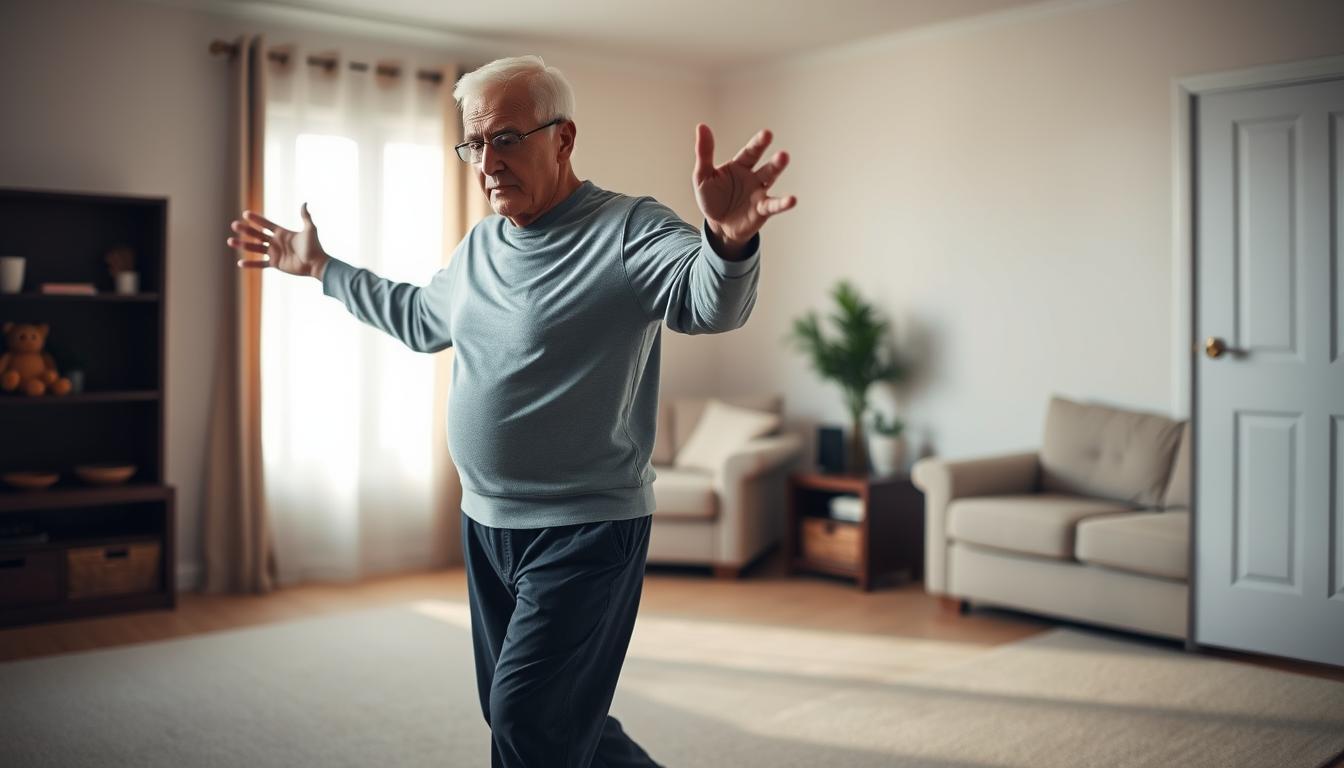
Simple balance routines that reduce fall risk at home
Staying steady on your feet is a critical part of healthy aging. For older adults, a loss of stability can significantly impact daily life. The statistics are sobering.
Each year in the United States, more than 14 million people aged 65 and older experience a tumble. That means one in four seniors falls annually. These incidents lead to millions of emergency room visits.
The good news is that you can take powerful steps to protect your independence. Research shows that specific physical activity can lower the chance of an accident by 23-24%. These movements are designed to build strength and stability.
This article will guide you through straightforward routines. You can do them in your living space with little to no equipment. Our goal is to help you feel more confident and secure in your own residence.
Whether you are a senior or a caring family member, these strategies offer a practical path toward better well-being. Let’s begin building a stronger foundation together.
Understanding the Importance of Balance and Fall Prevention
Recognizing the factors that contribute to instability empowers individuals to take proactive control of their health. Losing your footing is not an unavoidable part of getting older. With the right knowledge and actions, these events can often be avoided.
Impact of Falls on Older Adults
The Centers for Disease Control and Prevention reports that over 25% of adults 65 and older experience a tumble each year. This leads to 3 million emergency department visits. The consequences are severe.
These incidents cause over 38,000 deaths annually. Hip fractures are a major concern, with 319,000 occurring each year. A staggering 83% of these fractures are directly caused by a loss of stability.
Research Insights from Trusted Sources
The financial burden is immense. Healthcare costs for these injuries exceed $80 billion yearly. Medicare covers 67% of these expenses.
Several key factors increase risk. Using five or more medications significantly raises the likelihood. Hazards in the home, like bathrooms and dimly lit bedrooms, are common sites for incidents.
Research from institutions like Johns Hopkins confirms that targeted activities improve stability. This helps older adults maintain their daily routines and overall health.
Balance Exercises, Fall Prevention, Safety: A Comprehensive Approach
The most effective approach to maintaining steadiness involves a synergistic combination of movement practices and home adjustments. This comprehensive strategy integrates physical activity with environmental awareness for optimal results.
Research strongly supports this multi-faceted method. A 2020 review of 116 studies with 25,160 participants revealed significant benefits. Physical activity lowered incident rates by 23%, while specific stability-focused movements achieved a 24% reduction.
This training works by improving postural control and strengthening core muscles. It enhances coordination between body systems while building confidence. Multi-component programs that blend various techniques show the strongest results, reducing incidents by up to 28%.
The strategy rests on three pillars: targeted movements, environmental modifications, and consistent practice. This approach is accessible for most seniors, requiring minimal equipment. It adapts to various fitness levels and abilities for sustainable habit formation.
Setting Up a Safe Environment for Home Exercises
Creating a hazard-free area transforms your living space into an ideal training zone. Proper preparation allows you to concentrate on movement without worrying about potential risks. This foundation builds confidence and ensures productive sessions.
Decluttering and Adequate Lighting
Begin by clearing your exercise area completely. Remove throw rugs, electrical cords, and any loose items that could cause tripping. Keep pets in another room during your routine.
Ensure bright, even lighting throughout the space. Good illumination eliminates shadows and improves depth perception. This simple step significantly enhances your awareness.
Choosing Support Tools and Non-Slip Surfaces
Position a sturdy chair or kitchen countertop within arm’s reach. This provides immediate support if needed. The inside corner of a counter offers excellent stability.
Select a flat surface with good traction for your feet. Use non-slip mats on smooth floors. Wear supportive shoes or exercise barefoot based on your comfort level.
Always keep a phone nearby for emergencies. These precautions create a secure environment that promotes focus and progress.
Mastering Proper Posture and Body Mechanics
Your body’s alignment forms the core foundation for all movement stability. Proper posture and mechanics create the basis for effective routines and safe daily movements. They help you move with confidence and control.
Good posture involves maintaining an upright spine with relaxed shoulders. Engage your core muscles while keeping proper alignment from head to feet. This optimal body position supports your center of gravity.
Stability relies on multiple systems working together. Vision provides spatial awareness while the inner ear maintains equilibrium. Muscle strength offers support, and flexible joints allow adaptability. Brain coordination integrates these systems seamlessly.
Age brings natural changes that affect stability. Muscle strength decreases by 3-8% per decade after age 30. Joint flexibility diminishes over time, impacting movement quality. These changes make proper mechanics increasingly important.
Practical examples demonstrate effective body mechanics. When rising from a chair, lean your chest forward over toes. Shift weight deliberately and squeeze gluteal muscles while rising slowly. Controlled movements enhance stability throughout activities.
Mastering posture reduces joint strain and prevents injury. It builds functional strength for everyday tasks while improving overall balance. This foundation supports all movement patterns for long-term well-being.
Simple Sit-to-Stand Exercises for Strength and Stability
Mastering the movement of rising from a seated position is a fundamental skill for daily independence. This functional exercise directly improves your ability to get up from a chair, bed, or sofa with confidence.
Step-by-Step Guide to the Sit-to-Stand Routine
Begin by selecting a sturdy chair placed against a wall. Sit comfortably with your feet flat on the floor. Scoot forward to the edge of the seat.
Lean your chest forward over your toes. Shift your weight and push through your leg muscles to rise to a stable standing position. Lower yourself back down with control.
Aim for 8-15 high-quality repetitions. Perform this routine two times daily to build functional strength.
Modifications for Different Ability Levels
If needed, use your hands on the chair arms for assistance. Progress to crossing your arms over your chest as you gain strength.
Stop immediately if you feel any pain in your knee, back, or hips. Consult a doctor or physical therapist for guidance.
An advanced progression involves holding light weights during the exercise. This further challenges your leg muscles.
Dynamic Balance Routines to Enhance Everyday Stability
The ability to stay steady while walking, turning, or reaching represents a crucial skill for independent living. Dynamic balance involves maintaining stability during motion rather than static positions.
Most daily activities require movement-based stability. This includes navigating stairs, walking on uneven surfaces, and recovering from unexpected stumbles.
These routines challenge coordination, reaction time, and spatial awareness simultaneously. They prepare your body for real-world conditions where conditions change rapidly.
Research shows functional exercises reduce incidents by 24%. Programs combining multiple movement types achieve even better results.
Effective training includes weight shifting, directional stepping, and coordinated movements. These exercises integrate upper and lower body motion.
Walking variations build confidence for community engagement. Public spaces like shopping malls offer excellent practice environments.
This approach supports continued participation in social activities. It reduces apprehension during movement and enhances overall quality of life.
Single-Leg and Feet-to-Toe Balance Practices
Unilateral training practices focus on strengthening each side of your body independently for comprehensive stability. These movements specifically target the control needed for walking and stair navigation.
Progressions for Beginners
Start with the single-leg stand near a sturdy countertop or wall. Place both hands lightly on the surface for support. Lift one foot 2-3 inches off the ground.
Hold this position for 10 seconds, working toward 30 seconds. Complete 3-5 repetitions on each leg. Gradually reduce hand contact from two hands to one hand, then fingertips only.
Advanced Balance Drills
For those comfortable with basic positions, try the four-stage progression. Begin with feet shoulder-width apart, then move to feet together. Progress to semi-tandem and full tandem stands.
The one foot position challenges your stability significantly. Always maintain visual focus during home practice for safety. Perform five repetitions of each position twice daily.
These exercises build the foundation for better movement control. Consistent practice improves your overall balance and confidence in daily activities.
Integrating Additional Movements for Overall Strength
Expanding your movement repertoire builds comprehensive physical capacity. These integrated practices develop coordination that supports daily activities.
Heel-to-Toe Walking Techniques
Begin with your feet together and arms extended. Focus on a spot directly in front of you.
Take a step forward, placing the heel of your front foot against the toes of your back foot. Continue this precise walking pattern for 10-20 steps.
This movement improves dynamic control and strengthens core muscles. It mimics real-world challenges for better functional strength.
Calf Raises and Side-Stepping Routines
For calf raises, stand near a chair with feet hip-width apart. Rise slowly onto your toes, holding for 2-3 seconds.
Lower with control and complete 10-15 repetitions. This builds ankle stability and walking power.
Side-stepping involves moving laterally while maintaining posture. Take 10 steps to each side, keeping your body upright.
Additional movements include weight shifting and standing marches. Perform these exercises 3-5 times weekly for best results.
Always prioritize proper form and gradual progression. These practices enhance overall coordination while supporting long-term well-being.
Evidence Behind the Effectiveness of Balance Training
The empirical evidence supporting targeted movement interventions is both extensive and convincing. Research consistently validates the practical benefits of structured routines.
Statistical & Research Highlights
A landmark 2020 analysis examined 116 studies involving 25,160 participants. This comprehensive review found that physical activity reduces incident rates by 23%.
Programs specifically focusing on stability movements achieved a 24% reduction. Multi-component approaches combining various techniques showed even stronger results with 28% improvement.
These interventions work through multiple mechanisms. They enhance postural control and strengthen core musculature. Coordination between sensory and motor systems improves significantly.
Psychological confidence also increases, reducing apprehension during daily activities. The statistical improvements translate to meaningful real-world benefits for older adults.
With over 14 million seniors experiencing incidents annually, these evidence-based approaches offer substantial protection. They represent some of the most effective strategies available.
Physical Therapist Insights on Safe Exercise Practices
Professional guidance from qualified specialists ensures your movement routine addresses specific needs. Lora Stutzman, a physical therapist with Johns Hopkins Rehabilitation Network, works with older adults who experience unsteadiness.
“We treat patients who feel unstable while walking or standing,” Stutzman explains. “Targeted movements can build strength and improve stability.”
Consult your doctor or physical therapist before starting new activities. This is especially important if you have existing stability concerns.
When to Seek Professional Guidance
Consider working with a therapist if you’ve had recent incidents or near-misses. Significant stability problems or dizziness also warrant professional assessment.
Medical conditions affecting movement may require specialized programming. A physical therapist can create personalized routines for your specific situation.
Stop any exercise immediately if you feel pain in knees, back, or hips. Consult your healthcare provider about any discomfort during movement.
Stutzman recommends having company during home sessions for supervision. Open communication with your therapist ensures activities match your ability level.
Professional guidance reduces injury risk while maximizing program effectiveness. Proper technique instruction builds confidence in your daily movements.
Creating a Personalized Home Exercise Schedule
A well-structured personal schedule transforms occasional movement into a consistent health habit. This approach turns your home training into a sustainable routine that delivers lasting benefits.
Planning Consistent Sessions
Evidence shows three weekly sessions provide optimal results. A Monday-Wednesday-Friday pattern works well for most people.
Each session should last 15-20 minutes. Begin with 2-3 minutes of gentle warm-up movements. Include both static and dynamic balance exercises in your routine.
Practice functional movements like sit-to-stands. Finish with a gentle cool-down and stretching. Consistency matters more than intensity for long-term success.
Tracking Your Progress Over Time
Keep a simple log noting your session duration and difficulty. Record how long you can hold various positions. Notice improvements in your daily activities.
Schedule your exercise times when energy levels are highest. Treat these appointments as non-negotiable commitments. This consistency builds confidence and independence.
Regular practice three to five times weekly produces the best outcomes. Your personalized schedule becomes a powerful tool for maintaining well-being.
Tips for Maintaining Long-Term Balance and Confidence
The journey toward lasting confidence in your movements extends far beyond the initial learning phase. Building sustainable habits is crucial for continued success. This involves celebrating progress and adapting your routines as your abilities improve.
Building a Sustainable Routine
Consistency is the most critical factor for seeing benefits. Research shows that regular practice leads to continued improvement. Those who stop often see their gains diminish.
You may notice a greater sense of confidence within 4-6 weeks. Measurable improvements in steadiness often appear after 12-16 weeks of regular training. Benefits continue to build with ongoing practice.
The advantages extend well beyond physical stability. You develop stronger core muscles and better posture. Enhanced leg strength improves walking ability.
Mental and emotional benefits include increased confidence. Regular movement also releases mood-enhancing endorphins. This supports a better overall quality of life.
Start with achievable goals and exercise at the same time daily. Find a partner for accountability and vary your movements to maintain interest. Track your progress and celebrate milestones.
Remember that each session is an investment in your independence. The goal is continuous participation for a life lived fully and with confidence.
Integrating Mind-Body Techniques for Enhanced Stability
Connecting mental focus with physical movement creates a powerful synergy for steadiness. These practices combine deliberate action with breath awareness and body positioning.
Research shows modified Tai Chi movements reduce incidents by 23%. The gentle, flowing motions build coordination and mindfulness simultaneously.
Modified Tai Chi Movements
Begin with weight shifting while standing with feet apart. Slowly transfer your weight from one side to the other side.
Practice gentle arms swings while maintaining your position. Move your arms slowly from side to side with control.
Try controlled knee lifts by raising one foot briefly. Hold for a few seconds before lowering with precision.
Mindful reaching involves extending one arm front while staying steady. Keep both feet firmly planted during this activity.
Mindful Awareness in Daily Activity
Move slowly and smoothly with deliberate control. Focus on deep breathing while maintaining relaxed shoulders.
Cultivate awareness of your body position in space. Notice how your feet contact the ground during movement.
Integrate mindfulness into daily routines by moving intentionally. Take several seconds to center yourself before changing positions.
Evidence-based programs like Tai Chi for Arthritis offer structured learning. These exercises strengthen both physical muscles and mental focus.
The mind-body connection enhances proprioception and reduces tension. This comprehensive approach builds confidence in all movements.
Embracing Safety and Strength for a Confident Future
Building physical confidence through structured movement represents a proactive investment in long-term well-being and home independence. These evidence-based routines empower older adults to take control of their stability.
This comprehensive strategy combines physical activity with environmental awareness. It addresses potential risks from multiple angles for maximum protection.
Starting a new routine can feel challenging. Remember that it is never too late to begin. Progress gradually and stay consistent for the best results.
Always prioritize your well-being during practice. Stop immediately if you experience chest pain, new dizziness, or worsening joint discomfort. Seek professional guidance if needed.
A holistic approach extends beyond movement. Consider home modifications like better lighting and removing tripping hazards. Regular health check-ups are also vital.
This journey is an investment in a future filled with confidence and continued participation in meaningful activities. With proper support, you can build the foundation for a safe and fulfilling life.

Alex Oliver is a caregiver advocate and aging support researcher with over 10 years of experience helping families navigate the emotional and practical challenges of caring for elderly loved ones. Through Senior I Love, Alex shares research-based guidance, daily care strategies, and emotional resilience tools to support caregivers worldwide.